
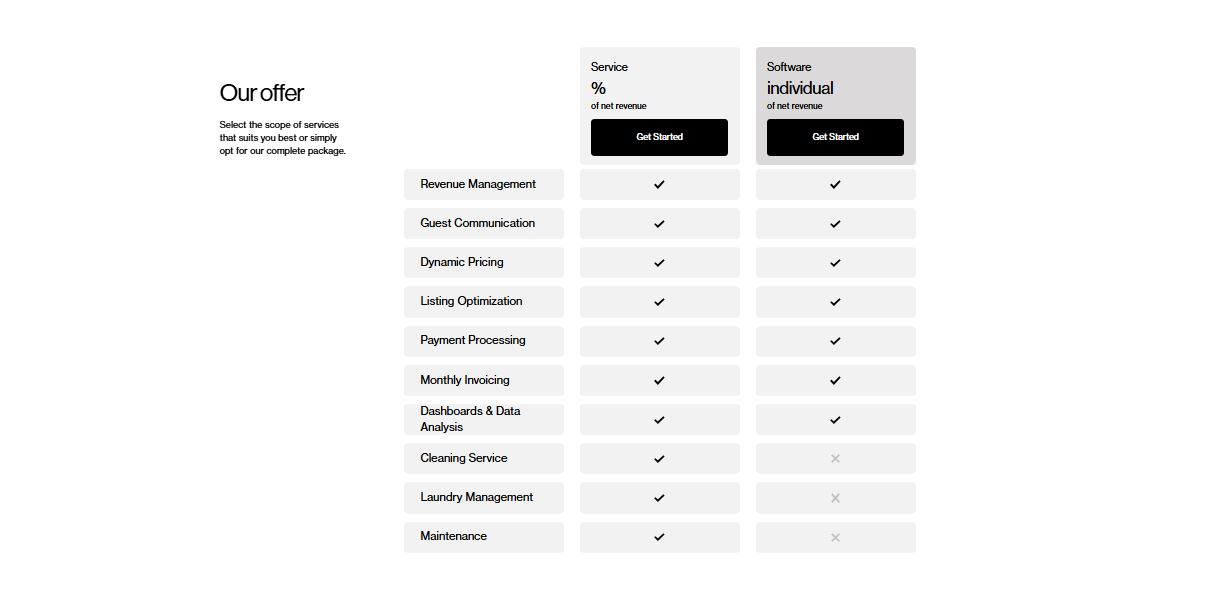
screenshot taken from: https://www.arbio.com/eng/property-management
When
Thursday, 16th April 2026, 6:30pm to 10:00pm
Where
Arbio Office, Greifswalder Strasse 212, Berlin, Germany
Hosting Organization
Google Developer Group Berlin
Participation Fee
Free Entrance
Agenda
Socializing, Host Intro, Talk 1, 15-Minute-Break, Talk 2, 15-Minute-Break, Talk 3, Socializing
Topics Covered
Applause for Sponsor Arbio, Free GCP Credits With No Credit Card Required & Berlin Code of Conduct (Host Intro), Context-First AI Systems for Robust Production-Ready AI Agents (Talk 1), Practical Lessons from Building AI Agents on the Google Cloud (Talk 2), AI & Cybersecurity (Talk 3)
I’ve learned something today
- The Ontology Playground (https://github.com/microsoft/Ontology-Playground) is a free, open-source project by Microsoft that lets you explore, build, and visualize ontologies directly in your browser. It’s a practical and beginner-friendly starting point to get hands-on with ontology concepts, from interactive graphs to designing your own models. As a fully static web app with zero backend dependencies, it runs entirely in the browser and is easy to deploy or use anywhere.
- As natekali writes in “AI’s Trillion-Dollar Opportunity: Context Graphs Explained Simply” (Dec 27, 2025): “We’ve spent decades building systems that record what happened. We’re about to spend the next decade building systems that record why it was allowed to happen.” The piece builds on ideas from Jaya Gupta and Ashu Garg in “AI’s Trillion-Dollar Opportunity: Context Graphs„ as well as Jamin Ball’s “Clouded Judgement 12.12.25 – Long Live Systems of Record”
- In the era of GenAI, a moat (Burggraben) is no longer defined by owning the AI model itself, but by proprietary context, orchestration capabilities, and deep workflow integration. As foundation models commoditize, sustainable advantage comes from feedback loops and accumulated decision context that continuously improve agents and make them difficult to replicate.
- In the book review “The Word Is Not Enough” on The Republic, a journal by The Palantir Foundation, Palantir Technologies is described as using ontologies to connect data with meaning. The review of the book the The Technological Republic explains that this ontology layer structures entities and relationships, creating a coherent “map of meaning” that turns fragmented data into actionable context.
- Ontologies for AI agents don’t need to be predefined. They can emerge bottom-up from decision traces captured during real workflows. By recording inputs, constraints, and actions at decision time, systems gradually learn entities, relationships, and rules, forming a living ontology grounded in actual behavior rather than top-down assumptions.
- With 100 decision traces you get anecdotes, with 1,000 decision traces you start to see patterns, and with 10,000 decision traces you build institutional knowledge that reliably guides how systems reason and act.
- A product engineer combines engineering, product, and operations by owning problems end to end and turning real workflows into software, often building systems that observe, decide, and act. Unlike classic software engineers who mainly implement predefined tasks, they define what to build and are responsible for outcomes, not just code.
- Arbio shares its office building in Berlin with several notable companies, including Langdock, Shutterstock, and Treatwell:

picture taken at venue
Published:
Modified: