
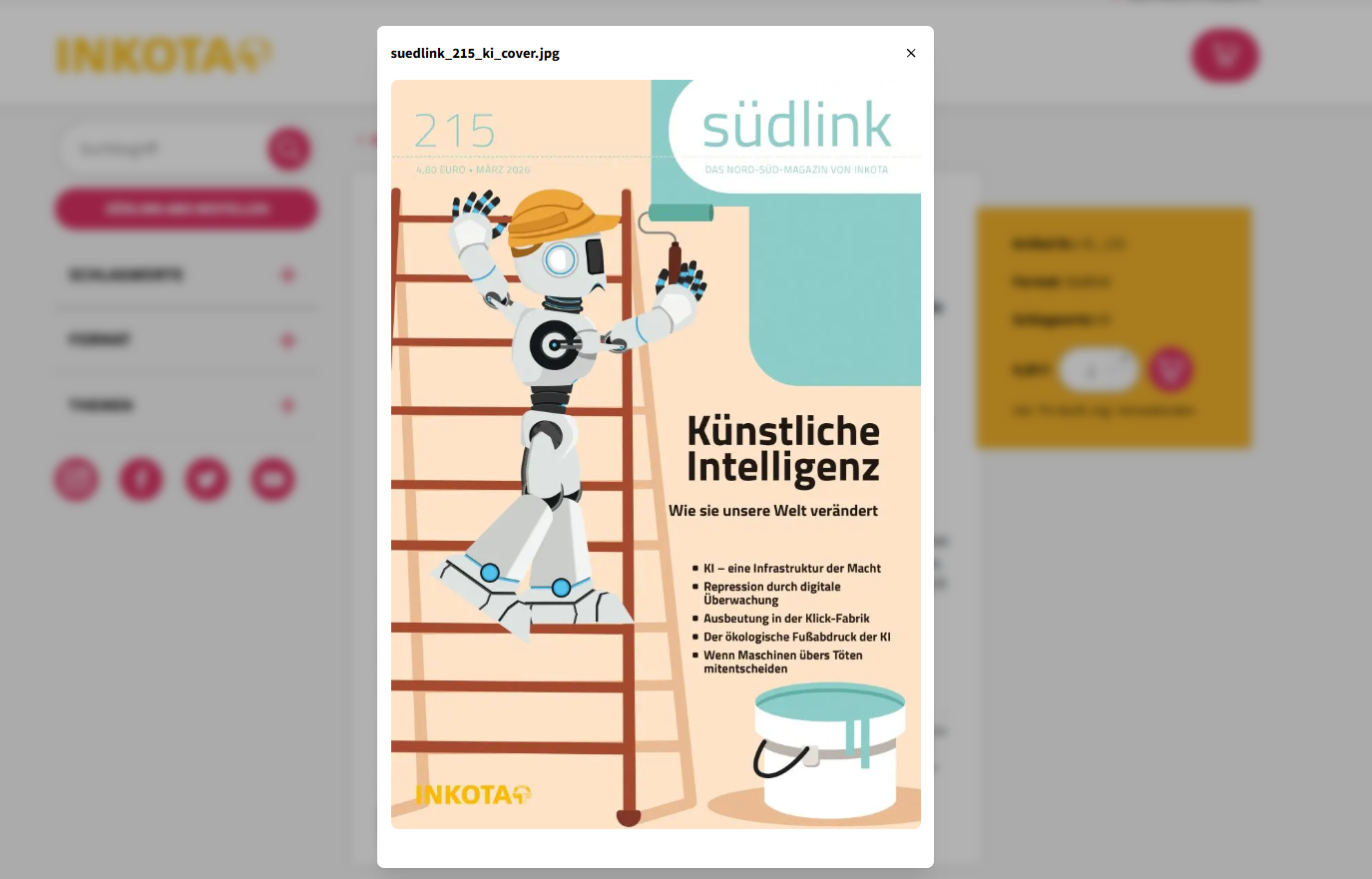
screenshot taken from: https://webshop.inkota.de/suedlink-215-kuenstliche-intelligenz
When
Saturday, 27th June 2026, 3:00pm to 5:00pm
Where
Zunftwirtschaft, Arminiusstrasse 2, Berlin, Germany
Hosting Organization
Topio e.V.
Participation Fee
Free Entrance
Agenda
Host Intro, Talk, QnA, Host Outro
Topics Covered
Cooling Equipment, Newsletter Box, Donation Box, Topio & Quick Hands-up Game (Host Intro), Raw Materials Required for Digitalization & Their Impact on the Global South (Talk), Chinese-Owned Cobalt Mines in Africa, The National Circular Economy Strategy of Germany, Recycling Company JuRec IT & Other Topics (QnA), Reading Suggestions, Roll-Up Exhibition Available to Borrow & Return of Cooling Equipment (Host Outro)
I’ve learned something today
- Digital neo-colonialism (Digitaler Neokolonialismus) describes how powerful states and technology companies use digital infrastructure, data, and critical raw materials to maintain economic control over less powerful countries. It reproduces colonial-style dependencies by extracting resources and profits while limiting local ownership, value creation, and technological independence.
- The Basel Action Network placed 200 small GPS tracking devices inside old printers and monitors to trace where e-waste actually ends up after being donated or recycled. The project revealed global disposal routes and provided evidence of irresponsible and illegal e-waste exports.
- The BGR (Bundesanstalt für Geowissenschaften und Rohstoffe) is Germany’s federal authority for geosciences and natural resources. Its Geoportal provides access to national and international data, maps, and publications on geology, soils, groundwater, geophysics, geochemistry, and raw materials.
- The 10 R strategies provide a framework for the circular economy by reducing resource consumption, extending product lifetimes, preserving material value, and minimizing waste. They help shift production and consumption away from a linear take–make–waste model toward more circular systems.
- Colonial continuities (Koloniale Kontinuitäten) describes how supposed historical patterns of appropriation, exploitation, and unequal power persist in new forms within the digital industry.
- The Global Atlas of Environmental Justice maps environmental conflicts worldwide. It documents affected communities, ecological damage, and resistance movements.
- At 39.5°C, the organizers used solid ventilation and cooling equipment so that the venue, located adjacent to the market hall, could still serve as a marketplace for new ideas and potentially socially disruptive narratives:
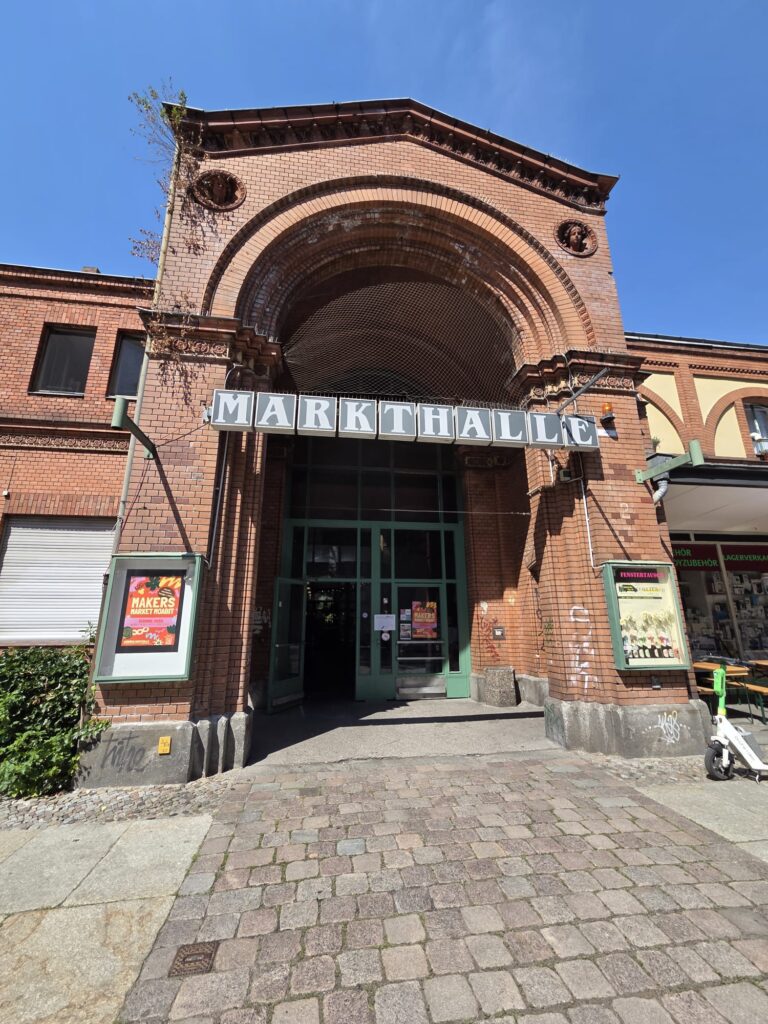
picture taken at venue
Published:
Modified: