
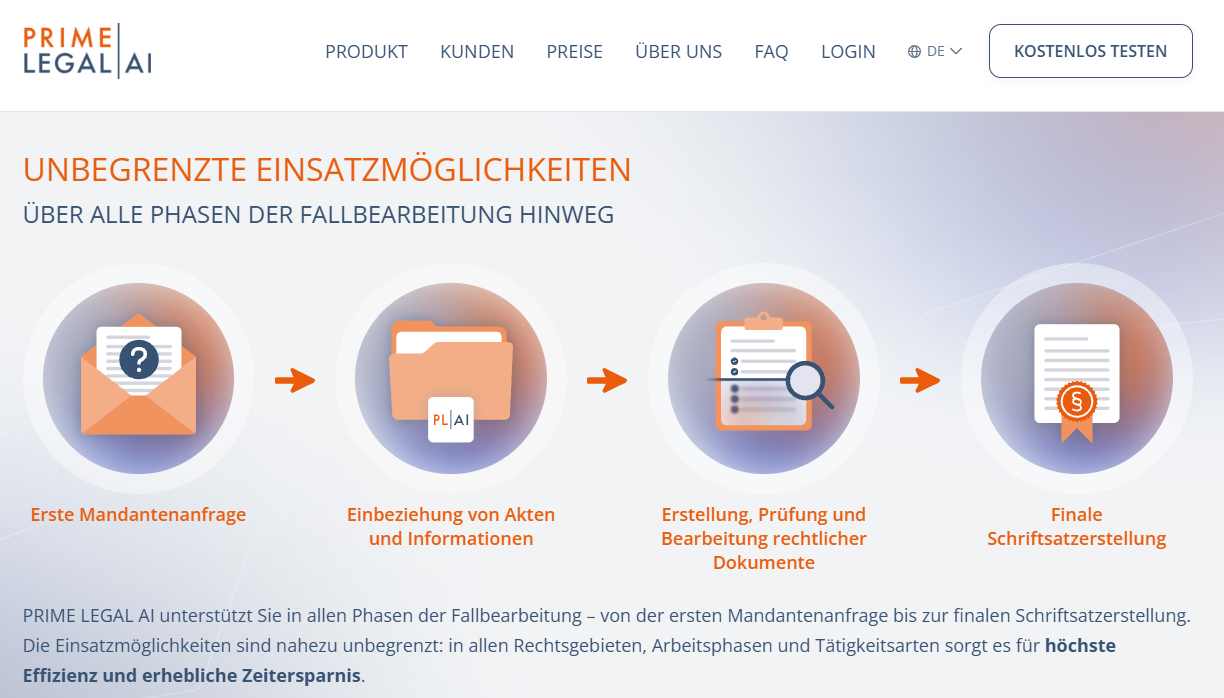
screenshot taken from: https://webflow-backend.primelegal.ai/partner/prime-legal-ai
When
Sunday, 8th November 2026, 5:30pm to 8:30pm
Where
Auditorium of GLS Campus Berlin, Kastanienallee 82, Berlin, Germany
Hosting Organization
Friedrich-Naumann-Stiftung für die Freiheit
Participation Fee
Free Entrance
Agenda
Host Intro 1, Host Intro 2, Talk, Panel Discussion, QnA, Socializing
Topics Covered
Balancing Efficiency, Human Judgment and Democratic Accountability in the Age of AI in the Judiciary (Host Intro 1), The Use of AI in the Justice System (Host Intro 2), AI in Legal Text Management & Accelerating Judicial Proceedings to Strengthen the Rule of Law as Value-Creating Infrastructure (Talk), Legal Operations, Judicial Infrastructure and Common Standards (Panel Discussion), Legal Practice as Therapeutic Conflict Management, Bavaria’s Proactive Justice Minister & AI in Private Legal Advisory Services (QnA)
I’ve learned something today
- AI in legal tech is primarily about text management because law is fundamentally a language-driven discipline, in which legal knowledge, rights, obligations, and arguments are encoded in vast amounts of written information. Consequently, AI’s greatest immediate value lies in transforming how legal professionals search, analyze, structure, and generate text.
- The concept of AI as the „Nullte Instanz“ (zeroth instance) envisions a new, preliminary layer of legal dispute resolution in which AI systems could assess legal claims, evaluate litigation risks, and facilitate settlements before cases reach the courts. While such a model could improve access to justice and reduce judicial workloads, it also raises fundamental questions about algorithmic gatekeeping, procedural fairness, and the extent to which AI should influence which disputes ultimately receive judicial consideration.
- Although the number of court filings has declined, the volume of text contained in legal submissions has increased substantially, a trend that also reflects the growing use of AI-assisted drafting, which enables the production of longer and more extensive pleadings with considerably less effort.
- Germany’s prohibition on non-lawyer ownership of law firms (Fremdbesitzverbot), upheld by the European Court of Justice, seeks to safeguard lawyers’ professional independence by preventing external investors from exerting commercial influence over legal practice. However, it also creates a competitive disadvantage for law firms, which face restrictions on raising external equity to finance costly AI development and digital transformation, while non-lawyer Legal Tech providers can attract venture capital more freely, potentially widening the innovation gap between traditional law firms and technology-driven legal service providers.
- The complexity and technical precision of legal language often create significant barriers to understanding court judgments. AI could help bridge this gap by translating legal reasoning into clear, accessible language without sacrificing its substantive meaning.
- The interdisciplinary research project TITAN, led by TU Braunschweig and funded by the Daimler and Benz Foundation, investigates how AI can be deployed reliably and responsibly within the German legal system.
- The GLS Campus provided an excellent setting for the panel discussion:
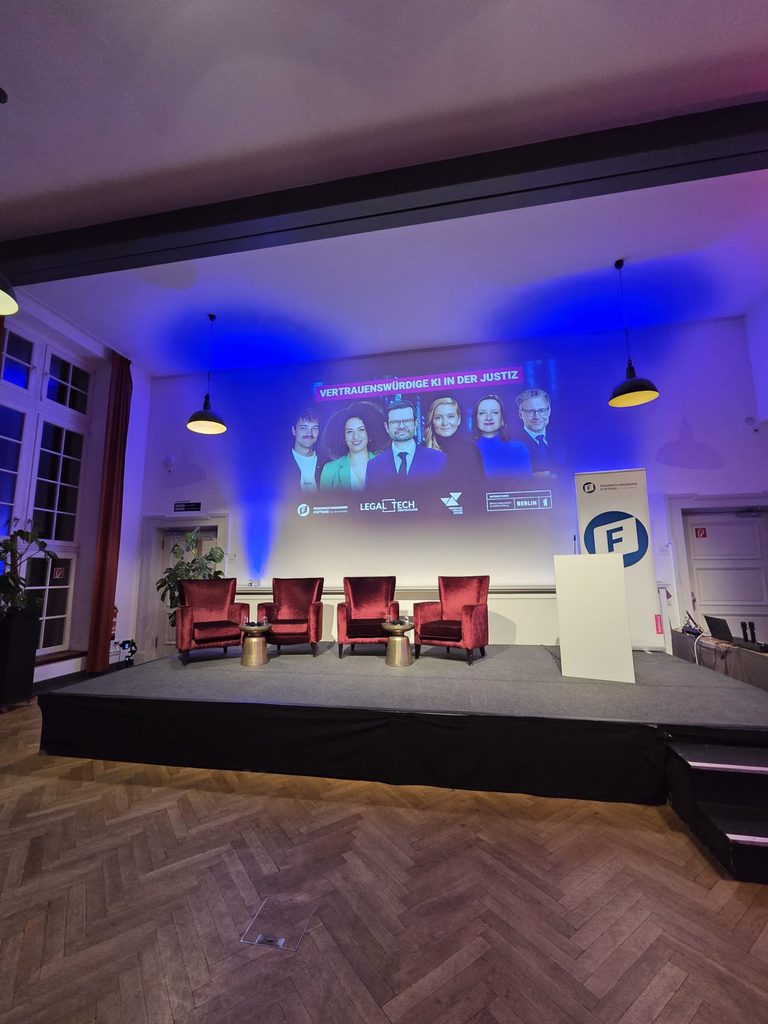
picture taken at venue
Published:
Modified: